
| Identification / पहचान | |
| Reference Number / संदर्भ संख्या | DL02012388 |
| Built Heritage/Site निर्मित धरोहर / स्थल |
Built Heritage |
| Name of the Monument / Built Heritage / Site स्मारक / निर्मित धरोहर / स्थल का नाम |
Swaminarayan Sewashram |
| State / राज्य | Delhi |
| District / जिला | North |
| Manual District | |
| Sub District / उप-जिला | Burari (CT) |
| Manual Sub District | |
| Village / गाँव | Civil Lines |
| Manual Village | |
| Cultural Affiliation / सांस्कृतिक सम्बंधन | Modern - आधुनिक काल |
| Date/Period तारीख/युग |
C. 20th Cent. CE |
| Sub Period | 1940 |
| Geo-Location / भू-अवस्थिति | Bela Road, Civil Lines |
| Latitude / अक्षांश | 28 40 34 |
| Longitude / देशान्तर | 77 13 46 |
| Approach to the Monument / पहुंचने का मार्ग | |
| Approach /पहुंचने का मार्ग | Approx. 300 m from Civil Lines metro station. |
| Air Port / विमानपत्तन | IGI Airport |
| Railway Station / रेलवे स्टेशन | Old Delhi |
| Bus Station / बस स्टैंड | ISBT Kashmere gate |
| Topographical Features / स्थलाकृतिक विशेषताएं | |
| Topographical Feature / स्थलाकृतिक विशेषताएं | Plain- मैदान |
| Topographical Description / स्थलाकृतिक विवरण | The structure is situated on the west of flood plains of Yamuna and east of Delhi Ridge. Delhi Ridge is northern extension of ancient Aravali range. The structure is shrouded in an urban setup. |
| History / इतिहास | |
| Brief History / संक्षिप्त इतिहास | The temple was built by the Swami Narayan group with the purpose to provide temporary residence to the devotees. |
| Local / Traditional description associated with Built Heritage / Site निर्मित धरोहर / स्थल से सम्बंधित स्थानीय/ परम्परागत विवरण |
The Swaminarayan Sampradaya originated from the Uddhav Sampradaya, led by Ramanand Swami. In 1800, he initiated Swaminarayan, then known as Nilkanth Varni, into the fellowship and named him, Sahajanand Swami also called Narayan Muni . |
| Architectural Style / स्थापत्य शैली | Hindu Style Nagara Architecture - नागर स्थापत्य |
| Building/ Structure/Site
इमारत / संरचना / स्थल |
|
| Description of Building/ Structure/Site
इमारत/संरचना/स्थल का विवरण |
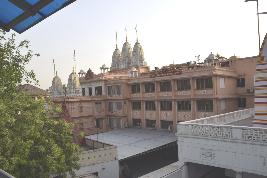
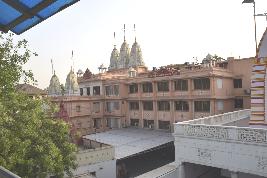
The structure is built on a rectangular plan and is east facing. There are two multi-storey buildings, adjoining to each other and an open courtyard in front of them. There are three shikharas rising from the main building and is decorated with mythological sculptures. The shikharas are topped with pinnacles to which flags are attached. From the adjoining building, which is double storey, there are two shikharas rising with similar decorative features and pinnacles with flags. The building has series of rectangular windows with glass panels. |
| Structure material and other material संरचनागत सामग्री और अन्य घटक |
|
| Building/Structure material and other material used प्रयोग में लाई गई इमारती / संरचनागत सामग्री और अन्य घटक |
This structure is built with Brick and plastered with cement and lime plaster. |
| Usage(s) & Sub Type | |
| Usage(s) / प्रयोग | Living Monument - प्रयोग |
| Sub-Usage(s)/ उप-प्रयोग | Temple Rest house |
| Ownership / स्वामित्व | Trust - न्यास |
| Protection status / संरक्षण अवस्था | Unprotected- असंरक्षित |
| Plan/Elevation विन्यास/उध्र्व विन्यास | |
| Published Reference / प्रकाशित संदर्भ | |
| Author / लेखक | William Dalrymple |
| Name / नाम | City of Djinns, A year in Delhi, Pg- 122 |
| Year / वर्ष | 1993 |
| Published/Unpublished प्रकाशित / अप्रकाशित |
Published |

| © Disclaimer:NMMA may be contacted for any further information. The documented data is under correction and subject to validation. |