
| Identification / पहचान | |
| Reference Number / संदर्भ संख्या | DL06011512 |
| Built Heritage/Site निर्मित धरोहर / स्थल |
Built Heritage |
| Name of the Monument / Built Heritage / Site स्मारक / निर्मित धरोहर / स्थल का नाम |
Fatehpuri Masjid |
| State / राज्य | Delhi |
| District / जिला | Central |
| Manual District | |
| Sub District / उप-जिला | Others |
| Manual Sub District | Kotwali |
| Village / गाँव | Others |
| Manual Village | Shanjahanabad |
| Cultural Affiliation / सांस्कृतिक सम्बंधन | Medieval - मध्यकाल |
| Date/Period तारीख/युग |
C. 17th - 18th Cent. CE |
| Sub Period | 1650 A.D. |
| Geo-Location / भू-अवस्थिति | At the western end of Chandni Chowk, Shanjahanabad |
| Latitude / अक्षांश | 28 39 24 |
| Longitude / देशान्तर | 77 13 21 |
| Approach to the Monument / पहुंचने का मार्ग | |
| Approach /पहुंचने का मार्ग | Approx.1.6 km to the south-west of Old Delhi Railway Station and1.2 km to the south-west of Chandni Chowk Chandni Chowk metro station |
| Air Port / विमानपत्तन | IGI |
| Railway Station / रेलवे स्टेशन | Old Delhi |
| Bus Station / बस स्टैंड | Old Delhi |
| Topographical Features / स्थलाकृतिक विशेषताएं | |
| Topographical Feature / स्थलाकृतिक विशेषताएं | Others- अन्य |
| Topographical Description / स्थलाकृतिक विवरण | Yamuna flood plain. It lies in area between the flood plain of river Yamuna and Delhi Ridge. Delhi Ridge is a Northern extension of ancient Aravalli Range. |
| History / इतिहास | |
| Brief History / संक्षिप्त इतिहास | The historical mosque was built by Fatehpuri Begum one of the wives of the Emperor Shah Jahan in the year 1650 A.D. It still bears her name and is one of the most important mosques in Delhi. |
| Local / Traditional description associated with Built Heritage / Site निर्मित धरोहर / स्थल से सम्बंधित स्थानीय/ परम्परागत विवरण |
Regular prayer is held at the mosque along with other important religious ceremonies. Id-ul-Fitr and id-ul-Azha is celebrated in a grand scale in the Mosque. |
| Architectural Style / स्थापत्य शैली | Mughal - मुग़ल |
| Building/ Structure/Site
इमारत / संरचना / स्थल |
|
| Description of Building/ Structure/Site
इमारत/संरचना/स्थल का विवरण |
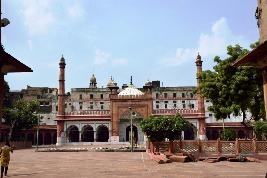
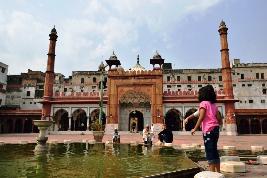
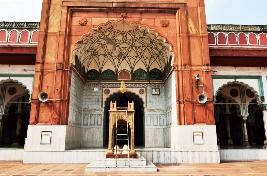
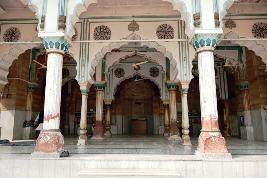
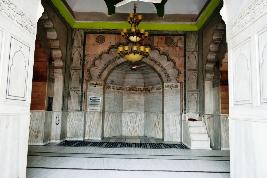
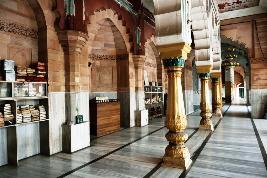
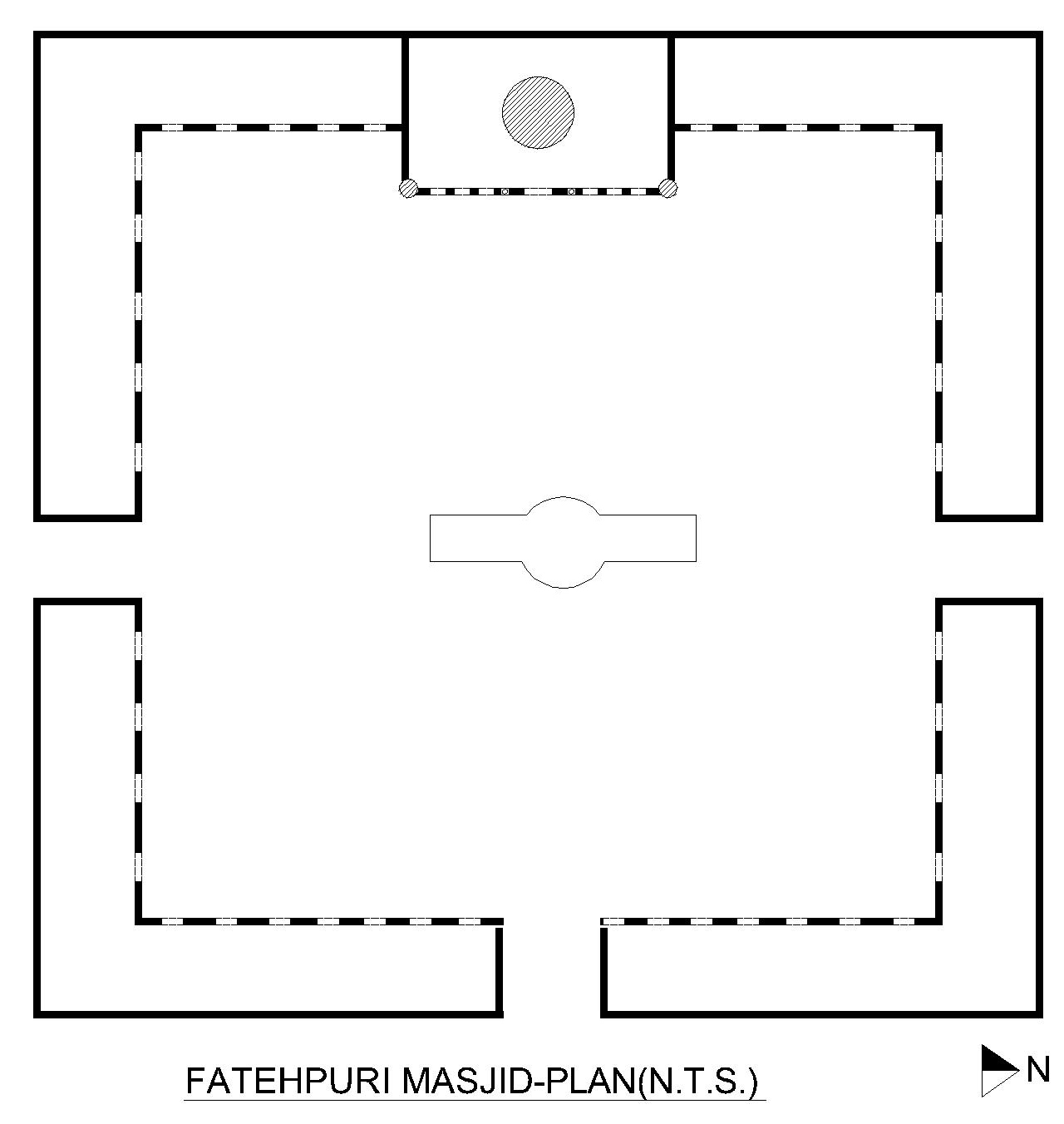
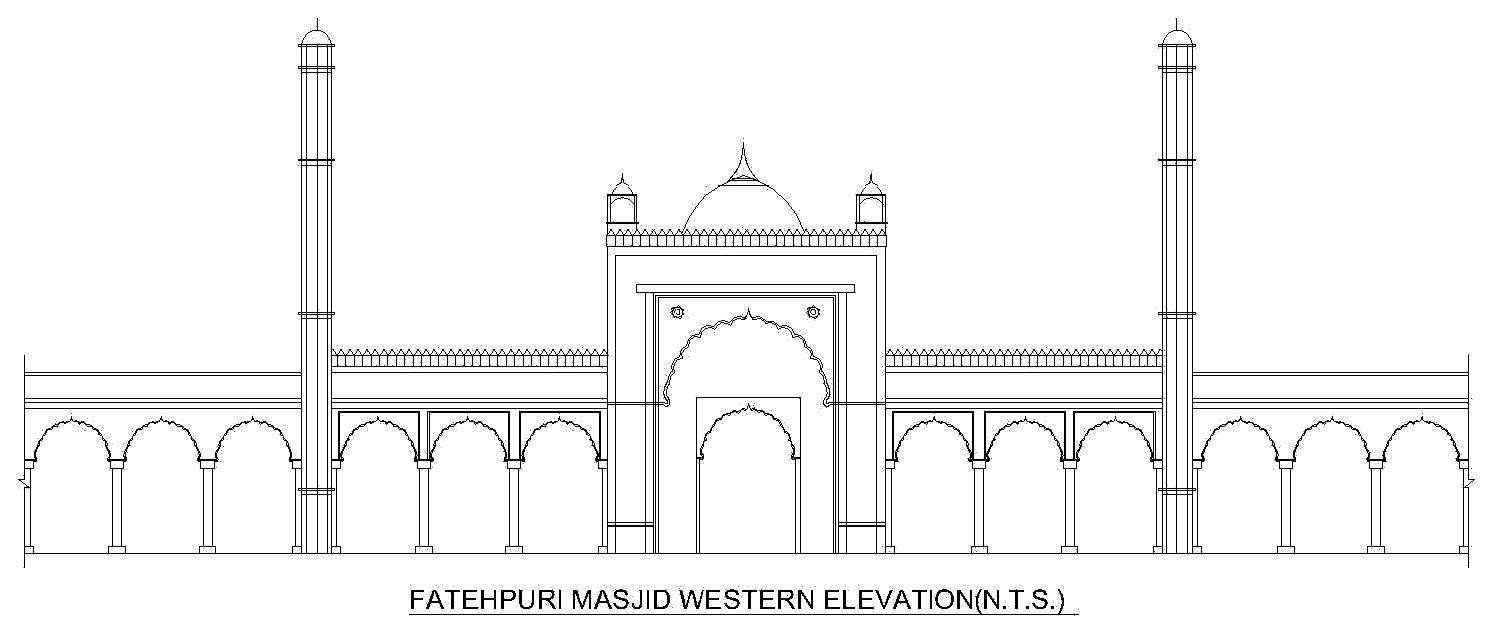
This mosque is a beautiful specimen of the Mughal architecture and stands spectacularly with the lofty eastern gateway in front of the historic Red Fort. It is seven bays wide and built in red sandstone with a single dominating dome flanked by towering minarets. The plastered dome is mammoth in structure and it has been intelligently plastered in such a way that from a distance, it would resemble a marble dome and is crowned with inverted lotus cresting topped by gilded pinnacle. There are strips of white marble on the main arch and on the domes of the mosque. On either side of the main central lofty arch are three wings with three scalloped arched openings. The interiors of the mosque have been painted vibrantly, so are the calligraphic inscriptions on the arched entrance, wall and on the front face; the ornamental golden shahjahani columns along with cylindrical fluted columns, floral motifs and the multicoloured decoration with green, gold and blue hues - the gold and silver complement and contrast with green, each other to create an impressive fusion that is glaringly vibrant and brings in sharp focus the painstakingly executed designs and ornamentation against the red sandstone background. The use of numerous arches provides impeccable symmetry and dazzle to the mosque; the intricately designed central mihrab has been lighted up with fluorescent lamps while the side indentations are stuffed with books and religious discourses. There are rows of red stone pillared verandah on both sided of the mosque. The large courtyard is stone paved and has a large central tank. The courtyard is surrounded by single and double storeyed apartments which are used as shops and dwelling houses externally. |
| Structure material and other material संरचनागत सामग्री और अन्य घटक |
|
| Building/Structure material and other material used प्रयोग में लाई गई इमारती / संरचनागत सामग्री और अन्य घटक |
The mosque building is constructed of Lakhori bricks coated with plaster and red sandstone as core materials. Marble and sandstone is used as cladding materials. |
| Usage(s) & Sub Type | |
| Usage(s) / प्रयोग | Living Monument - प्रयोग |
| Sub-Usage(s)/ उप-प्रयोग | It is used as a mosque and madarsa. |
| Ownership / स्वामित्व | Waqf Board - वक्फ बोर्ड |
| Protection status / संरक्षण अवस्था | Unprotected- असंरक्षित |
| Plan/Elevation विन्यास/उध्र्व विन्यास |
|
| Published Reference / प्रकाशित संदर्भ | |
| Author / लेखक | Zafar Hasan |
| Name / नाम | Monuments of Delhi, Vol-2 |
| Year / वर्ष | 1997 |
| Published/Unpublished प्रकाशित / अप्रकाशित |
Published |

| © Disclaimer:NMMA may be contacted for any further information. The documented data is under correction and subject to validation. |