
| Identification / पहचान | |
| Reference Number / संदर्भ संख्या | DL09011510 |
| Built Heritage/Site निर्मित धरोहर / स्थल |
Built Heritage |
| Name of the Monument / Built Heritage / Site स्मारक / निर्मित धरोहर / स्थल का नाम |
Kalka Mandir |
| State / राज्य | Delhi |
| District / जिला | South |
| Manual District | |
| Sub District / उप-जिला | Others |
| Manual Sub District | Kalakji |
| Village / गाँव | Others |
| Manual Village | Kalakji |
| Cultural Affiliation / सांस्कृतिक सम्बंधन | Medieval - मध्यकाल |
| Date/Period तारीख/युग |
C. 18th - 19th Cent. CE |
| Sub Period | 1764 A.D |
| Geo-Location / भू-अवस्थिति | To the east of east of Nehru place on the Outer Ring Road, Kalkaji |
| Latitude / अक्षांश | 28 32 55 |
| Longitude / देशान्तर | 77 15 40 |
| Approach to the Monument / पहुंचने का मार्ग | |
| Approach /पहुंचने का मार्ग | Approx. 250 m north-west of Kalkaji Mandir metro station and approx. East of intersection of Lotus Temple road and Kalkaji road. |
| Air Port / विमानपत्तन | IGI |
| Railway Station / रेलवे स्टेशन | Nizamuddin |
| Bus Station / बस स्टैंड | Nehru Place |
| Topographical Features / स्थलाकृतिक विशेषताएं | |
| Topographical Feature / स्थलाकृतिक विशेषताएं | Others- अन्य |
| Topographical Description / स्थलाकृतिक विवरण | It lies in area between the flood plain of river Yamuna and Delhi Ridge. Delhi Ridge is a Northern extension of ancient Aravalli Range. |
| History / इतिहास | |
| Brief History / संक्षिप्त इतिहास | The temple of Kalkaji is said to have a very ancient origin, but the oldest parts of the structure date back to the 18th century. Itis believed to have been constructed not earlier than the 1764 A.D. by the Maratha rulers.In 1816 A.D. Mirza Raja Kidar Nath, the Peshkar of Akbar It is said to have made some additions to it. This is an important Hindu shrine that attracts vast throngs of devotees. |
| Local / Traditional description associated with Built Heritage / Site निर्मित धरोहर / स्थल से सम्बंधित स्थानीय/ परम्परागत विवरण |
The major ritual consists of offering and bathing the idol Mata Snanam with milk followed by an aarti every morning 6 am and evening 7.30 pm . This, in turn, is followed by hymn recitation. |
| Architectural Style / स्थापत्य शैली | Mughal Maratha Period - मुग़ल - मराठा कालीन |
| Building/ Structure/Site
इमारत / संरचना / स्थल |
|
| Description of Building/ Structure/Site
इमारत/संरचना/स्थल का विवरण |
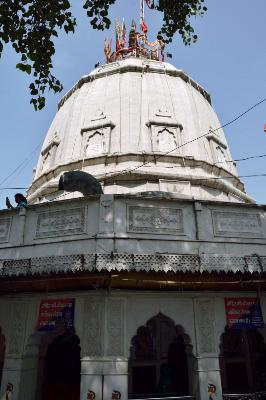
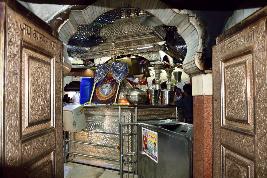
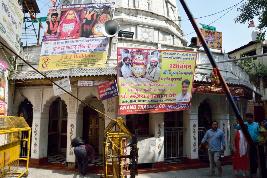
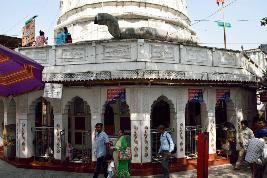
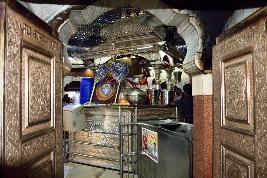
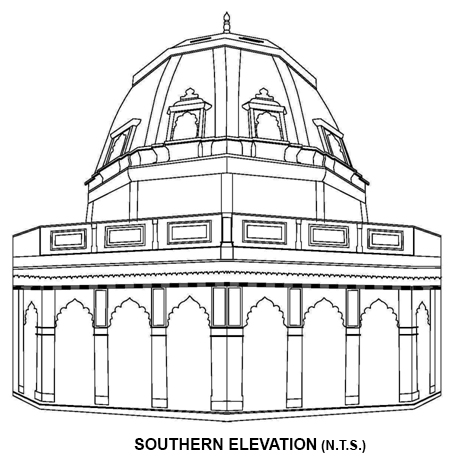
The gigantic temple is a pyramidal tower. The central chamber which is 12-sided in plan, approx. 7.3 m across, with a doorway in each side, is paved with marble and is surrounded by a verandah measures approx. 2.7 m wide and containing 36 cusped arched openings. This verandah encloses the central chamber from all sides. At the middle of this arcade, opposite the eastern doorway, there are two red sandstone tigers sitting on a marble pedestal on which the inscription engraved on the marble railings is repeated. The language of the inscriptions is Urdu and the characters on the railings as well as on the pedestals is nastaliq without any pretensions to antiquity. Between the tigers there is stone image of Kali Devi with her name engraved on in Hindi, and a trident of stone standing before it. There are small shrines of other deities like Shiva, Hanuman, Ganesha, Lakshmi-Narayan, Bhairon, Sita-Ram and the nine planets in the temple premises. There is also a hawan shala, a holy Neem tree and a Tulsi plant in the temple courtyard. |
| Structure material and other material संरचनागत सामग्री और अन्य घटक |
|
| Building/Structure material and other material used प्रयोग में लाई गई इमारती / संरचनागत सामग्री और अन्य घटक |
The temple is constructed of brick masonry and finished with plaster. Floor and pyramidal superstructure is cladded with marble. |
| Usage(s) & Sub Type | |
| Usage(s) / प्रयोग | Living Monument - प्रयोग |
| Sub-Usage(s)/ उप-प्रयोग | It is used for religious purpose as a temple. |
| Ownership / स्वामित्व | Trust - न्यास |
| Protection status / संरक्षण अवस्था | Unprotected- असंरक्षित |
| Plan/Elevation विन्यास/उध्र्व विन्यास |
|
| Published Reference / प्रकाशित संदर्भ | |
| Author / लेखक | Zafar Hasan |
| Name / नाम | Monuments of Delhi, Vol-2 |
| Year / वर्ष | 1997 |
| Published/Unpublished प्रकाशित / अप्रकाशित |
Published |

| © Disclaimer:NMMA may be contacted for any further information. The documented data is under correction and subject to validation. |