
| Identification / पहचान | |
| Reference Number / संदर्भ संख्या | DL05011506 |
| Built Heritage/Site निर्मित धरोहर / स्थल |
Built Heritage |
| Name of the Monument / Built Heritage / Site स्मारक / निर्मित धरोहर / स्थल का नाम |
Lal Masjid |
| State / राज्य | Delhi |
| District / जिला | New Delhi |
| Manual District | |
| Sub District / उप-जिला | Others |
| Manual Sub District | Chanakya Puri |
| Village / गाँव | Others |
| Manual Village | B.K. Dutt Colony Jorbagh |
| Cultural Affiliation / सांस्कृतिक सम्बंधन | Late Medieval - उत्तर मध्यकाल |
| Date/Period तारीख/युग |
C. 18th - 19th Cent. CE |
| Sub Period | Late Mughal |
| Geo-Location / भू-अवस्थिति | Approx. 20 m east of Dargah Shah-e-Mardan, B.K. Dutt Colony, Jorbagh |
| Latitude / अक्षांश | 28 34 58 |
| Longitude / देशान्तर | 77 13 0 |
| Approach to the Monument / पहुंचने का मार्ग | |
| Approach /पहुंचने का मार्ग | Approx. 600 m south-east of Jorbagh metro station and 650 m north-east of Safdarjung bus stand, Karbala Road |
| Air Port / विमानपत्तन | IGI |
| Railway Station / रेलवे स्टेशन | New Delhi |
| Bus Station / बस स्टैंड | Safdarjung |
| Topographical Features / स्थलाकृतिक विशेषताएं | |
| Topographical Feature / स्थलाकृतिक विशेषताएं | Plain- मैदान |
| Topographical Description / स्थलाकृतिक विवरण | Part of Urban Fabric. It lies in area between the flood plain of river Yamuna and Delhi Ridge. Delhi Ridge is a Northern extension of ancient Aravalli Range. |
| History / इतिहास | |
| Brief History / संक्षिप्त इतिहास | It is commonly known as Lal Masjid and is situated immediately north of Hazrat Arif Ali Shah s mausoleum.It was built during the time of last Mughal emperor Bahadur Shah Zafar. |
| Local / Traditional description associated with Built Heritage / Site निर्मित धरोहर / स्थल से सम्बंधित स्थानीय/ परम्परागत विवरण |
It is a living mosque and used for religious purpose. |
| Architectural Style / स्थापत्य शैली | Mughal - मुग़ल |
| Building/ Structure/Site
इमारत / संरचना / स्थल |
|
| Description of Building/ Structure/Site
इमारत/संरचना/स्थल का विवरण |
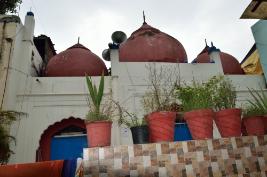
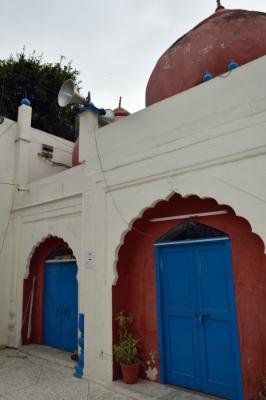
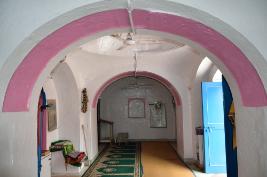
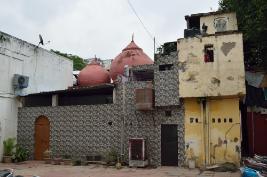
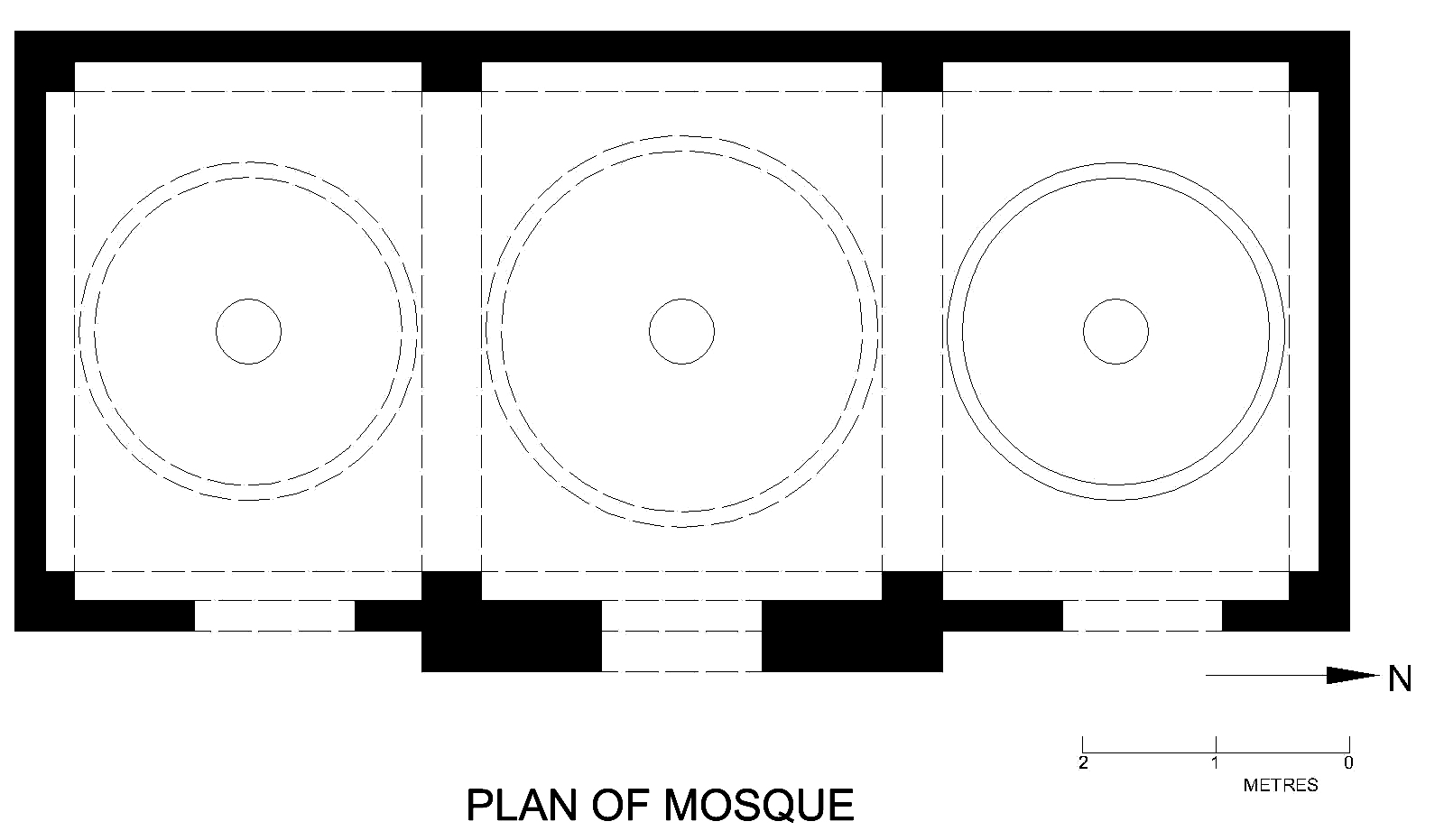
The mosque constructed on rectangular plan measuring 8.66 m by 4.36 m. It is three bays wide and single bay deep. It can be entered through the central multi-foliated archway which now fitted with wooden door, those at the corners being blocked off. All three compartments are roofed by double domes with bulbous outer domes. The western Qibla wall has three mihrab recesses and the central mihrab is emphasized by raising the wall.In contrast to the subdued white and red exteriors, the interiors are flamboyantly painted in green and white colors . |
| Structure material and other material संरचनागत सामग्री और अन्य घटक |
|
| Building/Structure material and other material used प्रयोग में लाई गई इमारती / संरचनागत सामग्री और अन्य घटक |
The materials used in buildings are Lakhori brick masonry stone faced , local stone and ceramic tiles. |
| Usage(s) & Sub Type | |
| Usage(s) / प्रयोग | Living Monument - प्रयोग |
| Sub-Usage(s)/ उप-प्रयोग | It is used for religious purpose. |
| Ownership / स्वामित्व | Others - अन्य |
| Protection status / संरक्षण अवस्था | Unprotected- असंरक्षित |
| Plan/Elevation विन्यास/उध्र्व विन्यास |
|
| Published Reference / प्रकाशित संदर्भ | |
| Author / लेखक | Zafar Hasan |
| Name / नाम | Monuments of Delhi, Vol-2 |
| Year / वर्ष | 1997 |
| Published/Unpublished प्रकाशित / अप्रकाशित |
Published |

| © Disclaimer:NMMA may be contacted for any further information. The documented data is under correction and subject to validation. |