
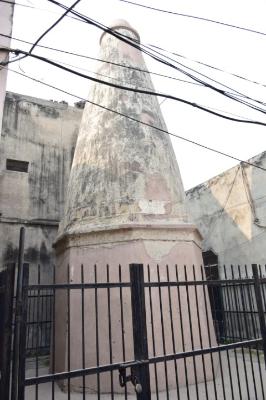
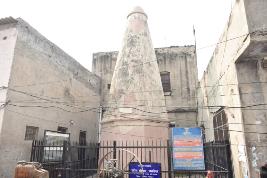
| Identification / पहचान | |
| Reference Number / संदर्भ संख्या | PB04016990 |
| Built Heritage/Site निर्मित धरोहर / स्थल |
Built Heritage |
| Name of the Monument / Built Heritage / Site स्मारक / निर्मित धरोहर / स्थल का नाम |
Kosminar |
| State / राज्य | Punjab |
| District / जिला | Jalandhar |
| Manual District | |
| Sub District / उप-जिला | Nakodar (M Cl) |
| Manual Sub District | |
| Village / गाँव | Tut |
| Manual Village | |
| Cultural Affiliation / सांस्कृतिक सम्बंधन | Late Medieval - उत्तर मध्यकाल |
| Date/Period तारीख/युग |
C. 16th - 17th Cent. CE |
| Sub Period | Early Mughal |
| Geo-Location / भू-अवस्थिति | Tut, Nakodar, Jalandhar |
| Latitude / अक्षांश | 31 07 39 |
| Longitude / देशान्तर | 75 28 44 |
| Approach to the Monument / पहुंचने का मार्ग | |
| Approach /पहुंचने का मार्ग | It is situated at a distance of 5.3 km from Nakodar Bus Stand. |
| Air Port / विमानपत्तन | Ludhiana Airport |
| Railway Station / रेलवे स्टेशन | Nakodar Railway Station |
| Bus Station / बस स्टैंड | Nakodar Bus Stand |
| Topographical Features / स्थलाकृतिक विशेषताएं | |
| Topographical Feature / स्थलाकृतिक विशेषताएं | Plain- मैदान |
| Topographical Description / स्थलाकृतिक विवरण | The topography of Jalandhar is typical representative of alluvial plains. It owes its origin to the aggravation work of the Sutlej river. The structure is situated in a semi-urban set up of the district. |
| History / इतिहास | |
| Brief History / संक्षिप्त इतिहास | The Kos Minars are medieval Indian milestones along the Grand Trunk Road in northern Indian subcontinent that were introduced by the 16th-century Pashtun ruler Sher Shah Suri. Kos Minars were erected to serve as markers of distance along royal routes from Agra to Ajmer, Agra to Lahore, and from Agra to Mandu in the south |
| Local / Traditional description associated with Built Heritage / Site निर्मित धरोहर / स्थल से सम्बंधित स्थानीय/ परम्परागत विवरण |
Englishmen brought back detailed reports of the Kos Minars between 1615 and 1618.In 1619, Emperor Jahangir ordered Bakir Khan, Fauzdar of Multan to erect a minaret at every kos. In addition, many caravansary roadside inns were built for travelers. Later emperors such as Shah Jahan continued to add to the network of Kos Minars. In the Mughal period, there were around 600 minars.In the north, they were extended as far as Peshawar and in the east to Bengal via Kannauj. |
| Architectural Style / स्थापत्य शैली | Colonial Style - औपनिवेशिक शैली |
| Building/ Structure/Site
इमारत / संरचना / स्थल |
|
| Description of Building/ Structure/Site
इमारत/संरचना/स्थल का विवरण |
This is an elongated structure having faceted base and circular top built on a raised rectangular platform. It has iron railings. |
| Structure material and other material संरचनागत सामग्री और अन्य घटक |
|
| Building/Structure material and other material used प्रयोग में लाई गई इमारती / संरचनागत सामग्री और अन्य घटक |
The structure is made up of bricks and plastered by cement. |
| Usage(s) & Sub Type | |
| Usage(s) / प्रयोग | Living Monument - प्रयोग |
| Sub-Usage(s)/ उप-प्रयोग | N.A |
| Ownership / स्वामित्व | N.A - उपलब्ध नहीं |
| Protection status / संरक्षण अवस्था | Unprotected- असंरक्षित |
| Plan/Elevation विन्यास/उध्र्व विन्यास | |
| Published Reference / प्रकाशित संदर्भ | |
| Author / लेखक | Khandekar, Nivedita |
| Name / नाम | A milestone on the highway |
| Year / वर्ष | 2012 |
| Published/Unpublished प्रकाशित / अप्रकाशित |
Published |

| © Disclaimer:NMMA may be contacted for any further information. The documented data is under correction and subject to validation. |