
| Identification / पहचान | |
| Reference Number / संदर्भ संख्या | JK02002440 |
| Built Heritage/Site निर्मित धरोहर / स्थल |
Built Heritage |
| Name of the Monument / Built Heritage / Site स्मारक / निर्मित धरोहर / स्थल का नाम |
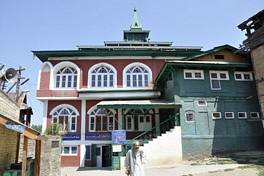
Khanqah Shah Hamdan |
| State / राज्य | Jammu and Kashmir |
| District / जिला | Baramula |
| Manual District | |
| Sub District / उप-जिला | Sopore (TC) |
| Manual Sub District | |
| Village / गाँव | |
| Manual Village | |
| Cultural Affiliation / सांस्कृतिक सम्बंधन | Medieval - मध्यकाल |
| Date/Period तारीख/युग |
C. 15th - 16th Cent. CE |
| Sub Period | |
| Geo-Location / भू-अवस्थिति | |
| Latitude / अक्षांश | 34 16 49 |
| Longitude / देशान्तर | 74 28 13 |
| Approach to the Monument / पहुंचने का मार्ग | |
| Approach /पहुंचने का मार्ग | |
| Air Port / विमानपत्तन | Srinagar |
| Railway Station / रेलवे स्टेशन | Baramulla |
| Bus Station / बस स्टैंड | Sopore |
| Topographical Features / स्थलाकृतिक विशेषताएं | |
| Topographical Feature / स्थलाकृतिक विशेषताएं | Hill - पहाड़ी |
| Topographical Description / स्थलाकृतिक विवरण | The khanqah is located in a closely built neighbourhood. The building is a part of the old Sopore riverfront town, located on the right bank of River helum. |
| History / इतिहास | |
| Brief History / संक्षिप्त इतिहास | Mir Syed Ali Hamdan popularly known as Amir-i-Kabir or Shah-i-Hamdan was the son of Syed Shahab-ud-din,the Alawi Governor of Hamdan,a province of Iran.Mir syed Ali became a disciple of his uncle Syed Ala-ud-din Simnani and was responsible for introducing the Kaburwi Sufi order into Kashmir.Syed Ali visited Kashmir for the first time in 1372 A.D. and thereafter in 1379 A.D. and 1383A.D.,during the reign of Sultan Qutub-u-din. The Khanqah at Sopore was built by Sultan Sikander on the banks of River Jhelum. It was reconstructed twice and for the first time in late 19th century by Aziz Ullah Kakroo. The building was modernized and altered again in the early 1980s. |
| Local / Traditional description associated with Built Heritage / Site निर्मित धरोहर / स्थल से सम्बंधित स्थानीय/ परम्परागत विवरण |
Sopore, a historic town of north Kashmir was founded by Suyya an able engineer of King Avantivarman in 880 AD and was named Suyya-pur. Sopore is another riverfront town spread out linearly on both the banks of River Jhelum. The principal occupation of local population is farming and tending fruit orchards. Much like the Srinagar city, Sopore town is abounded with wooden vernacular buildings. The town is known for its apple and grain productivity and as such still bears a number of granaries and orchards. |
| Architectural Style / स्थापत्य शैली | Vernacular- क्षत्रीय |
| Building/ Structure/Site
इमारत / संरचना / स्थल |
|
| Description of Building/ Structure/Site
इमारत/संरचना/स्थल का विवरण |
The khanqah comprises a three storey building constrcuted in the traditional Kashmiri style of architecture. The ground floor consists of a large prayer hall which is lead by a hammam. The main entrance to the building is via the hammam. The other side of the hammam consists of a series of wuzu-khanas with four large timber columns supporting the ceiling. The first and the second floors are accessed by an external timber staircase and comprise two large halls respectively. The building is surmounted by a traditional two tiered char-baam roof, surmounted by a square brangh pavilion covered with a spire. In spite of the various unsympathetic additions and alterations, which include the covering of the main western fa ade external with modern windows and paint, the building retains the spirit associated with traditional Kashmiri wooden architecture. |
| Structure material and other material संरचनागत सामग्री और अन्य घटक |
|
| Building/Structure material and other material used प्रयोग में लाई गई इमारती / संरचनागत सामग्री और अन्य घटक |
The materials used in the construction of this building include burnt bricks, cement mortar, wooden door window, frames and panels. The outer face of the building is done in burnt bricks in cement pointing. The flooring is in pcc. The building consists of pointed arched as well as rectangular window openings with glazed shutters. The ceiling is in wooden cherrijabi pattern, which is now covered with plywood The building is covered with three tier chaar-baam roof covered with CGI sheets. |
| Usage(s) & Sub Type | |
| Usage(s) / प्रयोग | |
| Sub-Usage(s)/ उप-प्रयोग | Religious |
| Ownership / स्वामित्व | Private - निजी |
| Protection status / संरक्षण अवस्था | Unprotected- असंरक्षित |
| Plan/Elevation विन्यास/उध्र्व विन्यास | |
| Published Reference / प्रकाशित संदर्भ | |
| Author / लेखक | Tarikh i Hassan, Volume I |
| Name / नाम | |
| Year / वर्ष | |
| Published/Unpublished प्रकाशित / अप्रकाशित |
Published |

| © Disclaimer:NMMA may be contacted for any further information. The documented data is under correction and subject to validation. |