
| Identification / पहचान | |
| Reference Number / संदर्भ संख्या | JK11002255 |
| Built Heritage/Site निर्मित धरोहर / स्थल |
Built Heritage |
| Name of the Monument / Built Heritage / Site स्मारक / निर्मित धरोहर / स्थल का नाम |
Geeta Bhawan |
| State / राज्य | Jammu and Kashmir |
| District / जिला | Punch |
| Manual District | |
| Sub District / उप-जिला | Punch (MC) |
| Manual Sub District | |
| Village / गाँव | |
| Manual Village | |
| Cultural Affiliation / सांस्कृतिक सम्बंधन | Modern - आधुनिक काल |
| Date/Period तारीख/युग |
C. 19th - 20th Cent. CE |
| Sub Period | |
| Geo-Location / भू-अवस्थिति | Geeta Bhawan |
| Latitude / अक्षांश | |
| Longitude / देशान्तर | |
| Approach to the Monument / पहुंचने का मार्ग | |
| Approach /पहुंचने का मार्ग | |
| Air Port / विमानपत्तन | Jammu |
| Railway Station / रेलवे स्टेशन | Jammu |
| Bus Station / बस स्टैंड | Punch |
| Topographical Features / स्थलाकृतिक विशेषताएं | |
| Topographical Feature / स्थलाकृतिक विशेषताएं | Hill - पहाड़ी |
| Topographical Description / स्थलाकृतिक विवरण | The property is located within the closely built neighbourhood of Saran Poonch which is on an elevated and slightly undulating site. The area is lush with trees and is surrounded by mountains with the LOC being only about a kilometer air-mile away. |
| History / इतिहास | |
| Brief History / संक्षिप्त इतिहास | According to the local source, the building was constructed by Mian Nizamuddin as his private haveli. It was later bought by a group of affluent local landlords and renamed Geeta Bhawan and served as a temple complex. After 1947, it was converted to a school. |
| Local / Traditional description associated with Built Heritage / Site निर्मित धरोहर / स्थल से सम्बंधित स्थानीय/ परम्परागत विवरण |
The area was one of the most affected ones during the Indian partition of 1947 and was badly destroyed in the earthquake of 2005. These events have therefore left a permanent and prominent impression on the people and also the urban fabric of the area and add, in unique ways, to the cultural essence of the place. |
| Architectural Style / स्थापत्य शैली | Vernacular- क्षत्रीय |
| Building/ Structure/Site
इमारत / संरचना / स्थल |
|
| Description of Building/ Structure/Site
इमारत/संरचना/स्थल का विवरण |
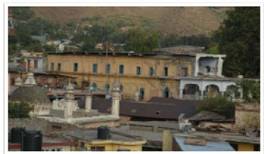
The building is L-shaped in plan, and is a two storey structure with load bearing construction. Brick and timber as chief building material. The building still has surviving original features like jharokhas, however, there have been major interventions in the recent past. Walls have been plastered with cement. A floor has been added above perhaps to accommodate more classrooms. |
| Structure material and other material संरचनागत सामग्री और अन्य घटक |
|
| Building/Structure material and other material used प्रयोग में लाई गई इमारती / संरचनागत सामग्री और अन्य घटक |
The principal building materials employed for the construction of this building are brick, stone and timber. Although the building is in a totally dilapidated and dangerous condition after the earthquake, it still bears remnants of some ornamental features like jharokas, ornate window surrounds and decorative pilasters. The ceiling which has totally collapsed had papier-mache ceiling and the flooring was timber planks supported on wooden floor joists. Window opening were pointed arched with glazed and paneled shutters. |
| Usage(s) & Sub Type | |
| Usage(s) / प्रयोग | |
| Sub-Usage(s)/ उप-प्रयोग | Public School |
| Ownership / स्वामित्व | Private - निजी |
| Protection status / संरक्षण अवस्था | Unprotected- असंरक्षित |
| Plan/Elevation विन्यास/उध्र्व विन्यास | |
| Published Reference / प्रकाशित संदर्भ | |
| Author / लेखक | |
| Name / नाम | |
| Year / वर्ष | |
| Published/Unpublished प्रकाशित / अप्रकाशित |
|

| © Disclaimer:NMMA may be contacted for any further information. The documented data is under correction and subject to validation. |