
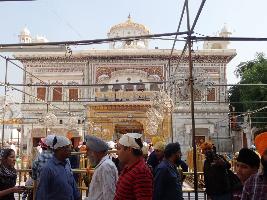
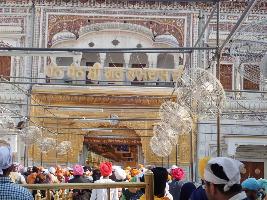
| Identification / पहचान | |
| Reference Number / संदर्भ संख्या | PB02017215 |
| Built Heritage/Site निर्मित धरोहर / स्थल |
Built Heritage |
| Name of the Monument / Built Heritage / Site स्मारक / निर्मित धरोहर / स्थल का नाम |
Darshani Daudi Guru Ram das Ji |
| State / राज्य | Punjab |
| District / जिला | Amritsar |
| Manual District | |
| Sub District / उप-जिला | Majitha (M Cl) |
| Manual Sub District | |
| Village / गाँव | Others |
| Manual Village | Amritsar City |
| Cultural Affiliation / सांस्कृतिक सम्बंधन | Colonial - औपनिवेशिककाल |
| Date/Period तारीख/युग |
C. 18th - 19th Cent. CE |
| Sub Period | 1855 |
| Geo-Location / भू-अवस्थिति | AMRITSAR, PUNJAB |
| Latitude / अक्षांश | 31 37 14 |
| Longitude / देशान्तर | 74 52 33 |
| Approach to the Monument / पहुंचने का मार्ग | |
| Approach /पहुंचने का मार्ग | It is situated at a distance of 1 km from Amritsar Bus Stand. |
| Air Port / विमानपत्तन | Amritsar Airport |
| Railway Station / रेलवे स्टेशन | Amritsar Railway station |
| Bus Station / बस स्टैंड | Amritsar Bus Stand |
| Topographical Features / स्थलाकृतिक विशेषताएं | |
| Topographical Feature / स्थलाकृतिक विशेषताएं | Plain- मैदान |
| Topographical Description / स्थलाकृतिक विवरण | Amritsar lies between the river Beas and Ravi forming the lower part of Upper Bari Doab of Punjab plain. This structure lies in a sub-urban area. |
| History / इतिहास | |
| Brief History / संक्षिप्त इतिहास | Guru Ram Das 1534 1581 was the fourth of the ten Gurus of Sikhism.He was born on 4 October 1534 in a family based in Lahore. |
| Local / Traditional description associated with Built Heritage / Site निर्मित धरोहर / स्थल से सम्बंधित स्थानीय/ परम्परागत विवरण |
Guru Ram Das is credited with founding the holy city of Amritsar in the Sikh tradition. 6 7 Two versions of stories exist regarding the land where Ram Das settled. In one based on a Gazetteer record, the land was purchased with Sikh donations, for 700 rupees from the owners of the village of Tung.According to the Sikh historical records, the site was chosen by Guru Amar Das and called Guru Da Chakk, after he had asked Ram Das to find land to start a new town with a man made pool as its central point. |
| Architectural Style / स्थापत्य शैली | Medieval - मध्य काल |
| Building/ Structure/Site
इमारत / संरचना / स्थल |
|
| Description of Building/ Structure/Site
इमारत/संरचना/स्थल का विवरण |
The structure is built on a rectangular plan. It is a double storey structure. It has multi-foliated arch entrance. It has a balcony with Bengali dome. It has Bengali dome chattri on terrace. It has ribbed dome cupola on all four corners. |
| Structure material and other material संरचनागत सामग्री और अन्य घटक |
|
| Building/Structure material and other material used प्रयोग में लाई गई इमारती / संरचनागत सामग्री और अन्य घटक |
The structure is built using bricks and plastered with cement. The windows are made of wood. |
| Usage(s) & Sub Type | |
| Usage(s) / प्रयोग | Living Monument - प्रयोग |
| Sub-Usage(s)/ उप-प्रयोग | RELIGIOUS |
| Ownership / स्वामित्व | Public - जनता |
| Protection status / संरक्षण अवस्था | Unprotected- असंरक्षित |
| Plan/Elevation विन्यास/उध्र्व विन्यास | |
| Published Reference / प्रकाशित संदर्भ | |
| Author / लेखक | NA |
| Name / नाम | NA |
| Year / वर्ष | NA |
| Published/Unpublished प्रकाशित / अप्रकाशित |
Unpublished |

| © Disclaimer:NMMA may be contacted for any further information. The documented data is under correction and subject to validation. |