
| Identification / पहचान | |
| Reference Number / संदर्भ संख्या | JK11002281 |
| Built Heritage/Site निर्मित धरोहर / स्थल |
Built Heritage |
| Name of the Monument / Built Heritage / Site स्मारक / निर्मित धरोहर / स्थल का नाम |
Poonch Fort |
| State / राज्य | Jammu and Kashmir |
| District / जिला | Punch |
| Manual District | |
| Sub District / उप-जिला | Punch (MC) |
| Manual Sub District | |
| Village / गाँव | |
| Manual Village | |
| Cultural Affiliation / सांस्कृतिक सम्बंधन | Modern - आधुनिक काल |
| Date/Period तारीख/युग |
C. 18th - 19th Cent. CE |
| Sub Period | |
| Geo-Location / भू-अवस्थिति | |
| Latitude / अक्षांश | 33 46 03 |
| Longitude / देशान्तर | 74 05 25 |
| Approach to the Monument / पहुंचने का मार्ग | |
| Approach /पहुंचने का मार्ग | |
| Air Port / विमानपत्तन | Jammu |
| Railway Station / रेलवे स्टेशन | Jammu |
| Bus Station / बस स्टैंड | Punch |
| Topographical Features / स्थलाकृतिक विशेषताएं | |
| Topographical Feature / स्थलाकृतिक विशेषताएं | Hill - पहाड़ी |
| Topographical Description / स्थलाकृतिक विवरण | The Poonch fort or Qilla as it is locally known is surrounded by a dry ditch on its northern side and is protected by 35 ft high masonry rampart wall. The fort is flanked by the main road on the southern side and a smaller approach road on its eastern side. |
| History / इतिहास | |
| Brief History / संक्षिप्त इतिहास | According to local sources the original construction of fort was started by a Muslim Raja of Poonch, Abdul Razaq in 1701 A.D. Only isolated sections of the fort rampart wall on the southern side date back to this period most of which was constructed by Rustum Khan in 1779 A.D. A series of buildings located in the north-western corner of the fort complex date back to the Sikh period. Most of the buildings in this section of fort are said to have been constructed by either Misar Diwan Chand or Diwan Moti Ram, as per the local sources. The main building of the fort housing the Durbar Hall was constructed during the Dogra rule when Poonch was ruled by descendents of Raja Dhian Singh, brother of the first Dogra ruler of Kashmir, Maharaja Gulab Singh. The Durbar Hall building which was constructed by Raja Moti Singh in the closing part of the 19th century is modeled on European patterns. |
| Local / Traditional description associated with Built Heritage / Site निर्मित धरोहर / स्थल से सम्बंधित स्थानीय/ परम्परागत विवरण |
The area was one of the most affected ones during the Indian partition of 1947 and was badly destroyed in the earthquake of 2005. These events have therefore left a permanent and prominent impression on the people and also the urban fabric of the area and add, in unique ways, to the cultural essence of the place. |
| Architectural Style / स्थापत्य शैली | Vernacular- क्षत्रीय |
| Building/ Structure/Site
इमारत / संरचना / स्थल |
|
| Description of Building/ Structure/Site
इमारत/संरचना/स्थल का विवरण |
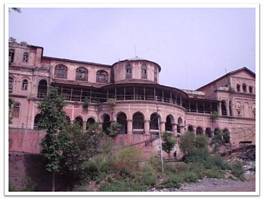
The Qila which was originally built during the Muslim rule has witnessed changing architectural styles through different periods of time. The entire fort complex spreads across an area of 7,535sq.m and is located atop a small rising hill in the midst of Poonch town. Within its quadrilateral ramparts lie series of rooms that were being used as government offices prior to the 2005 earthquake. The confines of the fort house several buildings oriented around open courtyards offering a mix of Mughal, Dogra and Colonial architectural styles. Much of the historic fabric of the fort complex has been lost during past reconstruction and repair practises and the destruction caused by the earthquake. In addition to the older structures in the fort, there are a number of newly constructed office buildings that further spoil the historic character of the complex. Despite the apathy facing the fort and the buildings therein, it still retains a historic character reminiscent of its bygone glory. At present, the complex is ventured very little and has been left totally unattended, as most of the offices have been shifted after the fort was declared unsafe in 2005. Owing to this, the vegetation over the past two years has grown dense and inhospitable. There are six major buildings within the fort of which the Durbar Hall could be considered as one of the most significant and fairly well preserved. The main fa ade of the Durbar hall stands impressively above the main road that leads to the Qilla and is adorned by decorative features like semi-circular arched openings, pediments, large arcaded colonnades, series of windows, niches, corbelled mouldings etc. |
| Structure material and other material संरचनागत सामग्री और अन्य घटक |
|
| Building/Structure material and other material used प्रयोग में लाई गई इमारती / संरचनागत सामग्री और अन्य घटक |
It is a load bearing structure constructed mainly in brick masonry. The traditionally used lakhori bricks have at a few places been replaced by modern bricks and nallah stones. The average wall thickness varies between 0.75m to 0.90m. Window opening vary in design and style from traditional arched to modern glazed and panelled. Original timber flooring has been replaced with RCC and covered with PCC at many places. The terrace floor is lined with cement concrete over a sub-base of brick tiles. A layer of bitumen, large patches of which are coming off, tops this layer to protect from moisture penetration. Many decorative features like decorative pilasters, jharokas and papier mache ceilings adorn the building at various places. |
| Usage(s) & Sub Type | |
| Usage(s) / प्रयोग | |
| Sub-Usage(s)/ उप-प्रयोग | Public |
| Ownership / स्वामित्व | State - राज्य |
| Protection status / संरक्षण अवस्था | Unprotected- असंरक्षित |
| Plan/Elevation विन्यास/उध्र्व विन्यास | |
| Published Reference / प्रकाशित संदर्भ | |
| Author / लेखक | |
| Name / नाम | |
| Year / वर्ष | |
| Published/Unpublished प्रकाशित / अप्रकाशित |
|

| © Disclaimer:NMMA may be contacted for any further information. The documented data is under correction and subject to validation. |