
| Identification / पहचान | |
| Reference Number / संदर्भ संख्या | JK02002226 |
| Built Heritage/Site निर्मित धरोहर / स्थल |
Built Heritage |
| Name of the Monument / Built Heritage / Site स्मारक / निर्मित धरोहर / स्थल का नाम |
Parvaiz Ahmad - House |
| State / राज्य | Jammu and Kashmir |
| District / जिला | Baramula |
| Manual District | |
| Sub District / उप-जिला | Baramula (TC) |
| Manual Sub District | |
| Village / गाँव | |
| Manual Village | |
| Cultural Affiliation / सांस्कृतिक सम्बंधन | Modern - आधुनिक काल |
| Date/Period तारीख/युग |
C. 19th - 20th Cent. CE |
| Sub Period | |
| Geo-Location / भू-अवस्थिति | Ganai Hamam Mohalla |
| Latitude / अक्षांश | |
| Longitude / देशान्तर | |
| Approach to the Monument / पहुंचने का मार्ग | |
| Approach /पहुंचने का मार्ग | |
| Air Port / विमानपत्तन | Srinagar |
| Railway Station / रेलवे स्टेशन | Baramulla |
| Bus Station / बस स्टैंड | Baramulla |
| Topographical Features / स्थलाकृतिक विशेषताएं | |
| Topographical Feature / स्थलाकृतिक विशेषताएं | Hill - पहाड़ी |
| Topographical Description / स्थलाकृतिक विवरण | The building is located on one side of a narrow street within the Ganai Hammam Mohallah. The Mohalla is closely built and has grown on the right side of the River Jhelum with hills forming its backdrop. |
| History / इतिहास | |
| Brief History / संक्षिप्त इतिहास | The building dates back to the mid 20thcentury and was built by Aijaz Ahmad who was involved with agricultural occupation. Presently, Parvaiz Ahmad who, is the descendent of Aijaz Ahmad is the owner of the house. |
| Local / Traditional description associated with Built Heritage / Site निर्मित धरोहर / स्थल से सम्बंधित स्थानीय/ परम्परागत विवरण |
The building represents the traditional architecture prevalent in the historic quarters of Kashmir during the 19th and early 20th centuries. |
| Architectural Style / स्थापत्य शैली | Vernacular- क्षत्रीय |
| Building/ Structure/Site
इमारत / संरचना / स्थल |
|
| Description of Building/ Structure/Site
इमारत/संरचना/स्थल का विवरण |
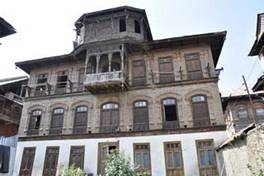
This taq building is a three storey property with a dub emerging from the second floor ad continuing up to the attic floor. The entrance to the building is centrally located .The entrance leads to the corridor, at the end of which is the staircase leading to the upper floors. The rooms are arranged symmetrically on either sides of the corridor. All the floors have four rooms each, with the absence of any large hall. The dub of the building displays exquisite pinjrakari work. There has been a recent addition of a wash room at the rear side of the building. The fa ade of the building has two beautifully carved, continuous fascia boards, separating the floors from each other. |
| Structure material and other material संरचनागत सामग्री और अन्य घटक |
|
| Building/Structure material and other material used प्रयोग में लाई गई इमारती / संरचनागत सामग्री और अन्य घटक |
The materials used in the construction of this building include burnt bricks, mud and lime plaster, wooden, door window frames and panels. Internally the walls are mud plastered except for the ground floor, which has been recently plastered with cement and painted over. The flooring of the building is covered with sethrun mud flooring .The ceiling consists of wooden joists and planks. The fa ade of the building has rectangular windows in the ground and the second floor while as the first floor has beautifully designed arched windows. The ground floor of the building has been plastered recently. |
| Usage(s) & Sub Type | |
| Usage(s) / प्रयोग | Living Monument - प्रयोग |
| Sub-Usage(s)/ उप-प्रयोग | Residencial |
| Ownership / स्वामित्व | Private - निजी |
| Protection status / संरक्षण अवस्था | Unprotected- असंरक्षित |
| Plan/Elevation विन्यास/उध्र्व विन्यास | |
| Published Reference / प्रकाशित संदर्भ | |
| Author / लेखक | |
| Name / नाम | |
| Year / वर्ष | |
| Published/Unpublished प्रकाशित / अप्रकाशित |
|

| © Disclaimer:NMMA may be contacted for any further information. The documented data is under correction and subject to validation. |