




| Identification | |
| Name of the Museum /Institution
संग्रहालय/संस्था का नाम |
Allahabad Museum, Allahabad |
| Reference Number / संदर्भ संख्या | NM-ALH-UP-120209 |
| Title/ Name of Object वस्तु का शीर्षक/नाम |
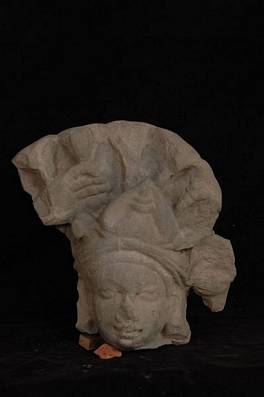
Naga head |
| Type of Object / वस्तु की किस्म | Sculpture - प्रतिमा |
| Dynasty /वंश | Kushanas - कुषाण |
| Period / तारीख/युग | |
| Style / शैली | |
| Provenance / उद्गम/क्षेत्र | Jhusi Mathura origin Allahabad District |
| Material / सामग्री | Sandstone - बलुआ पत्थर |
| Sub Material / उप.सामग्री | |
| Location at the Museum / संग्रहालय में कहा पर अवस्थित है। | Hall |
| State/UT राज्य/संघ राज्य क्षेत्र |
Uttar Pradesh |
| Measurement/Weight माप/वजन |
|
| Length(cm) / लंबाई | |
| Width(cm) / चौड़ाई | |
| Height(cm) / ऊंचाई | |
| Weight(gm) / भार | |
| Diameter(cm) /व्यास | |
| Thickness(cm)/मोटाई | |
| Depth(cm) /गहराई | 38 x 35.5 cm |
| Description / विवरण | |
| Description / विवरण | The head is considerably worn out and of the serpent canopy only five hoods survive. The raised right hand is held above the head, just below the hoods, in a spirited gesture which has been interpreted by Vogel, Indian serpent Lore, p. 42, as showing the Naga in the act of striking. The same author also suggests that the raised hand may signify the downpouring of rain by analogy with the similar gesture of the Universal Monarch cakravartin who thereby causes a shower of coins from the skies ibid, p. 282 . The position of the hand in the present image, just below the Naga hoods rather than raised towards the sky, does not appear to support this interpretation. Note the triangular shape of the turban plaque. |
| Identification Marks / पहचान चिन्ह | |
| Identification Mark Images / पहचान चिन्ह का छायाचित्र | |
| Condition / वस्तु की अवस्था | |
| Condition Description / स्थिति का विवरण | |
| Source | |
| From where acquired / अधिग्रहण का स्थान | |

| © Disclaimer:NMMA may be contacted for any further information. The documented data is under correction and subject to validation. |